The Invisible Shield: Why Cyber Security is the Ultimate Modern Necessity and the Future of Global Warfare
We live in an era where our entire existence is mapped out in the digital realm. From the moment you wake up and check your smartphone to the automated systems that manage your city's power grid, technology is the silent heartbeat of the modern world. But with this incredible convenience comes a terrifying vulnerability. What happens when the systems we trust with our money, our secrets, and our lives are compromised?
If you have ever wondered why major corporations spend billions on digital defense, how a single line of malicious code can bring a nation to its knees, and where the future of warfare is heading, you are in the right place. Let's dive deep into the world of Cyber Security—understanding its mechanics, its critical importance, the severe dangers lurking online, and how it is reshaping our future.
What Exactly is Cyber Security? The Core Mechanics
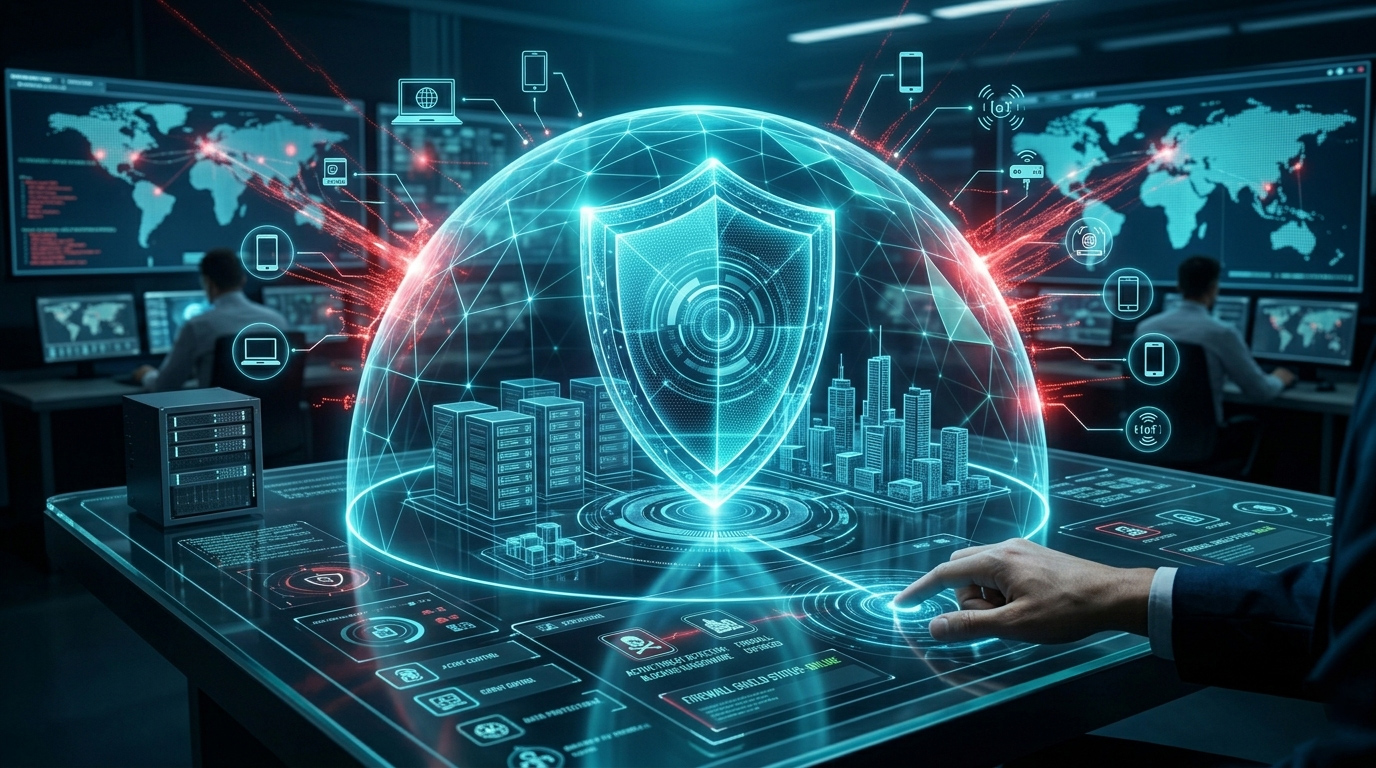
To understand the gravity of the situation, we must first define what cyber security actually is. At its core, cyber security is the practice of defending computers, servers, mobile devices, electronic systems, networks, and data from malicious attacks. It is not just one tool, but a complex, multi-layered approach to protection.
Cyber security professionals operate on a core principle known as the "CIA Triad":
- Confidentiality: Ensuring that sensitive information is only accessed by authorized individuals. For example, your medical records or credit card details should only be seen by you and your authorized providers, not a hacker halfway across the world.
- Integrity: Guaranteeing that data is accurate and trustworthy, and has not been tampered with. If you transfer $100 to a friend, integrity ensures a hacker cannot alter the transaction mid-way to send $10,000 to their own account instead.
- Availability: Ensuring that systems and data are available to authorized users when needed. A hospital's patient database must be accessible 24/7; if a cyberattack takes it offline, human lives are immediately put at risk.
How Does It Work Behind the Scenes?
Behind the scenes, cyber security utilizes an array of powerful technologies working in harmony:
- Firewalls: These act as the digital borders, filtering out suspicious traffic based on strict security rules.
- Encryption: This scrambles your data into complex, unreadable codes. Even if data is stolen, it cannot be understood without a specific digital decryption key.
- Endpoint Detection and Response (EDR): These systems act as active security guards, constantly monitoring devices (laptops, phones) for any signs of strange, malicious behavior.
- Zero Trust Architecture: The modern security philosophy which assumes that threats exist both outside and inside the network. It requires strict verification for every person and device trying to access resources, regardless of whether they are sitting in the company office or logging in from home.
The Dark Side of the Web: The Biggest Cyber Threats Today
The digital world is essentially a battlefield that never sleeps. The threats are constantly evolving, becoming more sophisticated, stealthy, and damaging. Here are the primary dangers that make cyber security an absolute necessity today:
1. Ransomware Attacks
This is arguably the most devastating cyber threat facing individuals and businesses today. Hackers infiltrate a system, secretly encrypt (lock) all the files, and then demand a massive ransom—usually in untraceable cryptocurrency like Bitcoin—in exchange for the decryption key. Entire hospital networks, public schools, and multinational corporations have been brought to a complete standstill by ransomware, forcing them to either pay millions or lose decades of critical data forever.
2. Phishing and Social Engineering
Hackers do not always break through technical firewalls; often, they break through human psychology. Phishing involves sending deceptive emails or text messages that look exactly like they are from a trusted source, such as your bank, PayPal, or even your boss. They create a false sense of urgency ("Your account will be suspended in 24 hours!") to trick you into clicking a malicious link and typing in your password. Social engineering relies on manipulating human trust to bypass millions of dollars' worth of security software.
3. Advanced Persistent Threats (APTs)
These are highly sophisticated, prolonged cyberattacks usually carried out by state-sponsored hacker groups. Instead of doing quick damage, APTs quietly infiltrate a network and remain undetected for months or even years. Their goal is not immediate financial gain, but rather the slow, continuous theft of highly sensitive data, intellectual property, or government secrets.
4. Distributed Denial of Service (DDoS)
Imagine ten thousand people trying to walk through a single door at the exact same time; the door gets blocked, and no one can get in. A DDoS attack works the same way. Hackers use a massive network of infected computers (called a botnet) to flood a target website or server with overwhelming traffic, causing it to crash and become completely unavailable to legitimate users.
The Ripple Effect: Why a Cyber Breach Matters
The importance of cyber security cannot be overstated. When a breach occurs, the damage extends far beyond just broken code. The ripple effects can destroy lives, businesses, and economies.
Financial Devastation: A successful data breach costs a company millions in lost revenue, legal fines, and recovery efforts. For small and medium-sized businesses, a single cyberattack is often a death sentence, leading to permanent bankruptcy within six months of the incident.
Loss of Trust and Reputation: If a company fails to protect its customers' data—such as credit card numbers, home addresses, or private messages—those customers will simply leave. Reputation damage is incredibly difficult, if not impossible, to repair in the digital age.
Identity Theft: For the everyday internet user, a corporate data breach often leads to personal identity theft. Cybercriminals buy stolen data on the dark web to open fraudulent credit cards, take out loans, or commit crimes under your name, leaving you to deal with the devastating financial and legal consequences.
The Future of Warfare: The Cyber Battlefield
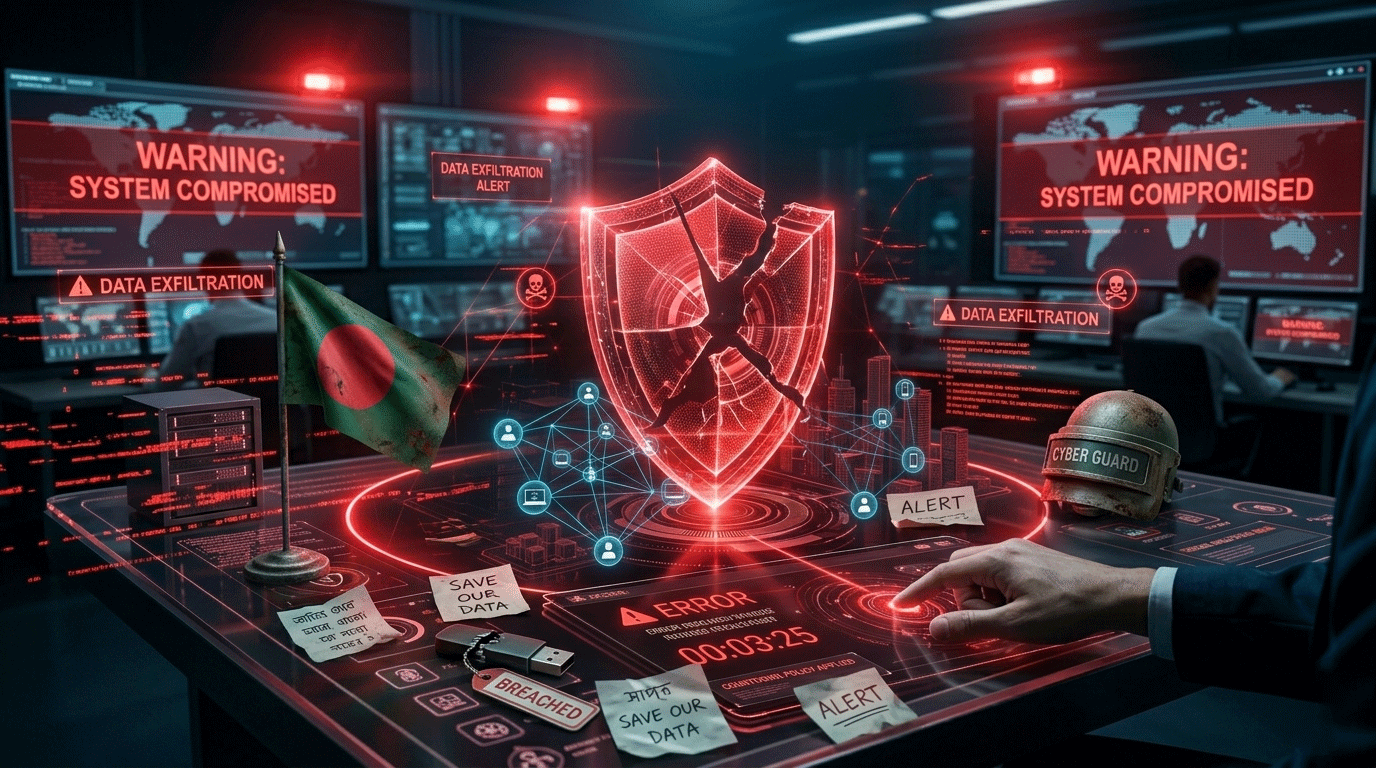
Perhaps the most alarming and critical aspect of cyber security is its role in the future of global conflict. The era of wars fought exclusively with tanks, fighter jets, and ground troops is fading. The next major global conflict will begin not with a physical explosion, but with a silent, devastating string of code. This is the reality of Cyber Warfare.
1. Targeting Critical Infrastructure
In the past, to destroy a country's power grid or water supply, a military had to drop physical bombs. Today, a state-sponsored hacker can sit in a basement thousands of miles away and infiltrate those exact same systems. By hacking into a nation's critical infrastructure, an enemy can turn off the electricity to major cities during a freezing winter, shut down the financial sector, or poison municipal water treatment plants. This can create mass panic and societal collapse without a single shot being fired.
2. Disruption of Military Capabilities
Modern militaries are entirely dependent on digital networks, satellite communications, and GPS. If a nation's cyber defense is weak, an enemy can blind their radar systems, intercept classified communications, or even alter the targeting coordinates of advanced missile systems. In a future war, the country with the strongest cyber security will dominate, because physical weapons are useless if the computers controlling them are compromised.
3. Cyber Espionage and Intellectual Property Theft
Countries are currently engaged in a silent, continuous cyber war to steal each other's secrets. State-backed hackers infiltrate defense contractors to steal the blueprints for next-generation fighter jets, or hack into pharmaceutical labs to steal the formulas for new medicines. This allows rival nations to bypass decades of expensive research and development, instantly leveling the global playing field.
4. Weaponizing Information (Deepfakes and Propaganda)
Cyber warfare is not just about hacking servers; it is about hacking the human mind. Artificial Intelligence has made it possible to create Deepfakes—hyper-realistic, completely fake videos of political leaders declaring war or making scandalous statements. When combined with automated bot networks on social media, hostile nations can launch massive disinformation campaigns to manipulate foreign elections, incite riots, and destroy a country from the inside out by dividing its citizens.
The Evolution of Defense: AI in Cyber Security
As cyber threats become more complex, human defenders can no longer keep up manually. This is where Artificial Intelligence (AI) and Machine Learning (ML) are revolutionizing cyber security.
Modern AI systems can analyze billions of data points across a network in a fraction of a second, establishing a baseline of "normal" behavior. If an employee suddenly tries to download massive amounts of confidential data at 3:00 AM, the AI immediately flags this as anomalous behavior and shuts down the account before the human IT team even wakes up.
However, this is a double-edged sword. Hackers are also using AI to write mutating malware that evades detection and to generate flawless, highly personalized phishing emails at an unprecedented scale. The future of cyber security is ultimately an arms race between defensive AI and offensive AI.
Personal Cyber Defense: How You Can Protect Yourself
While nation-states battle it out on a grand scale, it is crucial that everyday individuals take responsibility for their own digital borders. You do not need to be a computer scientist to drastically improve your security. Start with these foundational steps:
- Use a Password Manager: Stop using "Password123" for every website. Use a secure password manager to generate and store complex, unique passwords for every single account you own.
- Enable Two-Factor Authentication (2FA): This is the single most effective way to protect your accounts. Even if a hacker steals your password, they cannot log in without the secondary code sent to your phone or authenticator app.
- Keep Software Updated: Those annoying update notifications on your phone or laptop are usually critical security patches. Delaying them leaves the door wide open for hackers to exploit known vulnerabilities.
- Cultivate a Zero-Trust Mindset: Always be skeptical. Do not click on links in unexpected emails, do not download attachments from unknown senders, and do not connect to free, public Wi-Fi without using a Virtual Private Network (VPN) to encrypt your data.
Conclusion: Securing Our Digital Future
Cyber security is the invisible shield that holds the modern world together. As we move closer to a fully connected future—with smart cities, autonomous vehicles, and artificial intelligence deeply integrated into our daily lives—the stakes have never been higher.
A lack of cyber security is a direct threat to our privacy, our economy, and our global stability. However, by understanding the risks, implementing robust defense strategies, and maintaining a culture of constant vigilance, we can protect our digital frontier. The battle for cyberspace is ongoing, and whether you are a casual internet user or the CEO of a major corporation, you are a crucial part of the defense.
What steps have you taken to secure your digital life? Have you ever experienced a cyberattack or a phishing attempt? Let us know in the comments below!